
 More than two decades have passed since the end of the armed conflicts on the territory of the former Yugoslavia which took more than 130,000 lives. In today’s Serbia, the official memory politics on this period is characterised by historical revisionism, which sees the wars of the 1990s through a binary ethnocentric narrative about Serbian heroes and victims. Convicted war criminals enjoy public and institutional support, and many are even politically active. At the same time, in the memory politics and public discourses, the facts established before the International Criminal Tribunal for the former Yugoslavia (ICTY) and in numerous research projects are ignored or denied.
Young people are in daily contact with the dominant narratives through the media and political speeches, and in the family and peer groups. At the same time, formal education does not encourage the development of factual knowledge and critical thinking about these conflicts, and does not pay much attention to the wars of the 1990s, presenting them in a simplified way. Ethnocentrism and a selective approach to the facts dominate history curricula and textbooks. Problems in teaching about the wars of the 1990s appear in several areas of formal education in Serbia: curriculum design, textbook content, teacher training and education, and teaching practice.
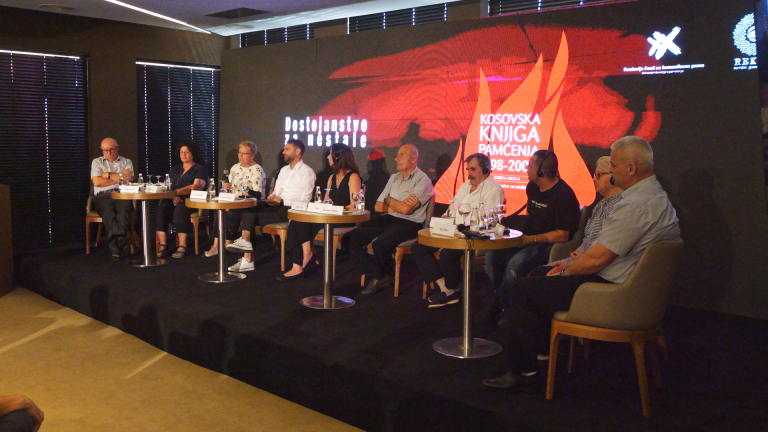
Jelena Đureinović from the Humanitarian Law Center discusses the 1990s wars in history education in Serbia with Aleksandar Todosijević and Rodoljub Jovanović. The online discussion can be followed on Tuesday, September 8 at 7PM on the Facebook page of the Humanitarian Law Center, and at the following link: https://www.facebook.com/events/988844644910882. The discussion will be in Serbian language.
Aleksandar Todosijević is a history teacher and the president of the Association for Social History – EUROCLIO. This association’s project about learning and teaching about the wars of the 1990s, “Learning a History that is not yet History”, which is being implemented at the regional level, was awarded international recognition by the Center for Global Pluralism in Canada as one of the best international projects for 2019.
Rodoljub Jovanović is a psychologist and doctoral student at the University of Deusto (Bilbao, Spain) who deals with historical representations of the violent past, with a special emphasis on how young people in post-conflict societies understand the violent past. He has conducted research on the attitudes and perceptions of history teachers in the Western Balkans.
The reason for this discussion is a policy paper on the wars of the 1990s in history education in Serbia, which was published by the Humanitarian Law Center as part of a project supported by the Delegation of the European Union to Serbia.