

 The European Commission (EC) published the Serbia 2015 Progress Report on November 10th, 2015. The Report follows the progress that Serbia has made in meeting the political and economic criteria for membership in the European Union. The findings of the Report related to establishing responsibility for the war crimes committed and a resolution of the legacy of the armed conflicts on the territory of the former Yugoslavia, follow to a great extent the recommendations from last year’s report.
The 2015 Report establishes that a certain progress has been made in investigating high profile cases, such as the Srebrenica genocide. However, there is still the problem about the absence of investigations against high-ranking members of the Serbian army and police; and the courts are still rendering lenient sentences for perpetrators of war crimes. In order to ensure trials of real quality, it is necessary to undertake adequate measures for preserving the comprehensive and significant experience in the prosecution of complex cases[1]. The existing framework has allowed reparation for only a few victims of war crimes, and nothing concrete has been done to remove the serious shortcomings in the witness protection programme. The political pressures on the Office of the War Crimes Prosecutor, which impede its work, are worrisome. It is necessary to adopt and implement a comprehensive national strategy for the prosecution of war crimes and the prosecutorial strategy for the prosecution of high-profile cases.
It is very important to strengthen and improve cooperation with similar institutions in the region for the purpose of adequate prosecution of war crimes. The EC commends the cooperation between the prosecutors of Serbia and Bosnia and Herzegovina, whose joint work has led to the filing of the indictment against five suspected perpetrators of war crimes (Štrpci Case)[2].
A specific, humanitarian problem is the fact that the fates of 10,814 persons who disappeared during the armed conflicts in the former Yugoslavia have not been resolved to date. Two of the main obstacles to the resolution of the fate of the missing is the lack of information on the location of mass grave sites and difficulties in the process of the identification of exhumed mortal remains.
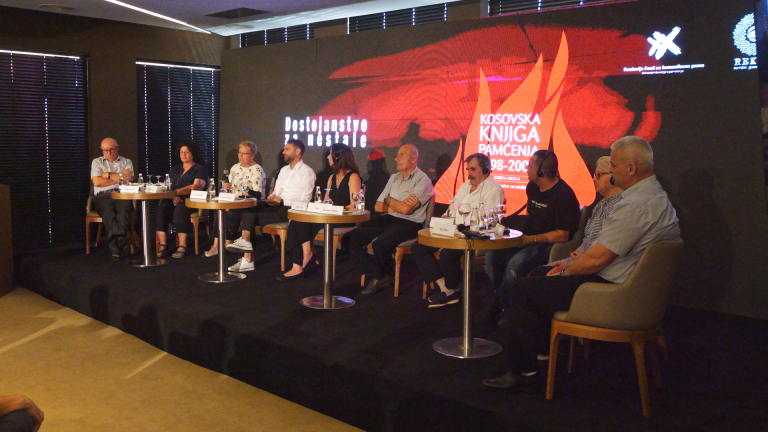
The EC reiterated this year, just as it did in the previous three years, that Serbia has provided active support to the Initiative for the establishing of RECOM.
Finally, in the area of procedural rights, the EC found that the legal framework for the protection of injured parties and witnesses in proceedings has not yet been completed, that the support and protection of victims of criminal offences have not been harmonized with EU regulations and standards, and that there is a lack of efficient mechanisms for the protection of the rights of victims.
The HLC sent its opinion to the European Commission in April 2015 with regard to the progress made by Serbia in the prosecution of war crimes, protection of the right of victims to reparation, institutional reform, the search for missing persons, and the Initiative for RECOM, as an annex to the Serbia 2015 Progress Report. Most of the HLC’s findings have been represented in this year’s EC Report.
__________________________________________
[1] In its appendix to the Serbia 2015 Progress Report, the HLC stated that one of the problems has been the removal of judges with years of experience in the prosecution of war crimes from these cases. An example of this is Judge Snežana Nikolić Garotić, who was in January 2015, on the basis of the decision of the President of the Higher Court in Belgrade and prior to the expiration of her mandate, taken away from the War Crimes Department and assigned to the Crime Department; at the time of her removal, she was sitting in chambers on six war crimes cases.
[2] The indictment filed in the Štrpci Case was filed on March 3rd, 2015, but the Extra-procedural council of the Higher Court in Belgrade War Crimes Department sent it back to the OWCP for amendment, on the grounds that the original indictment was not composed properly.