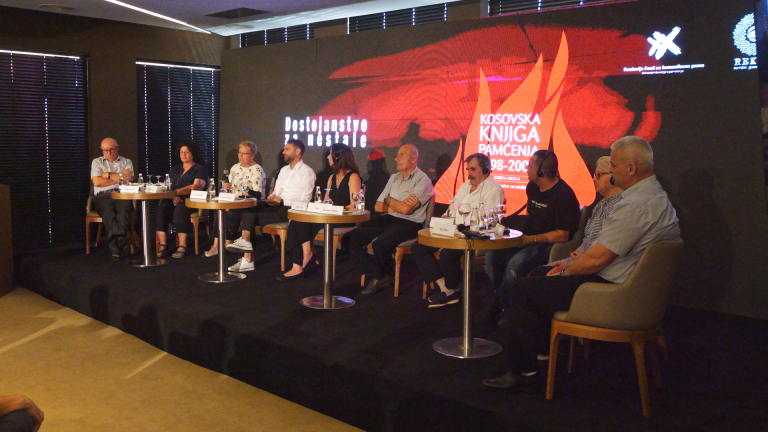

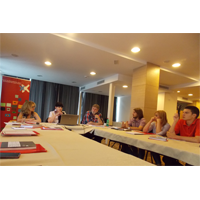
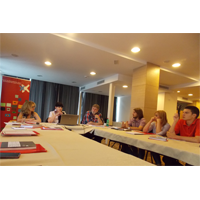
 The Humanitarian Law Center (HLC) organized the second consultative meeting titled History Books in Serbia: Education for Reconciliation? in Niš on Tuesday June 16th, 2015. Marijana Toma, HLC Education Director, and Professor Đokica Jovanović from the Faculty of Philosophy at the University of Belgrade opened the meeting.
In his introductory speech, Professor Đokica Jovanović discussed past events that have not been covered in history textbooks and that young generations in Serbia have no knowledge about, particularly stressing the bad influence of mythological presentations in the construction of the past for young generations and the issue of non-scientific analysis of the past.
During the presentation of the “Analysis of the Content of History Textbooks in Serbia
Regarding the Wars in the Former Yugoslavia in Light of the Facts Established Before the ICTY,” Marijana Toma emphasized that textbooks in Serbia, as well as in other countries of the former Yugoslavia, do not present the wars in the former Yugoslavia and the crimes committed in accordance with the facts that have been established, do not foster empathy with victims, and extenuate or even ignore responsibility for the crimes committed, cultivating the trend of “self-victimization.”
During the second session, which was devoted to what kind of future this distorted past offers, Maja Kamenov from the Center for Development of Civil Resources discussed the obstacles that her generation encounters when dealing with the recent and immediate war-time past. For them, the main problem is the denial of the crimes that were committed, but also the completely conflicting versions of the past that the young people encounter.
In late April 2015, the HLC organized an international conference on history textbooks in which it presented its “Analysis of the Content of History Textbooks in Serbia Regarding the Wars in the Former Yugoslavia in Light of the Facts Established Before the ICTY.” The consultative meetings initiated by the meeting in Novi Sad are aimed at presenting the “Analysis” to as many interested actors and gathering recommendations which will be embodied in the draft practical policy on the need for change of the content of history textbooks regarding the wars waged in 1990’s.
The next consultative meeting will be held in Kragujevac.
* * *
Education for Reconciliation is the HLC’s program of informal education on dealing with the past. A series of regional and national seminars have been organized as part of this program for students, young professionals in government institutions, and civil society activists.