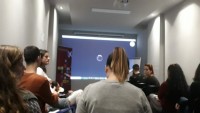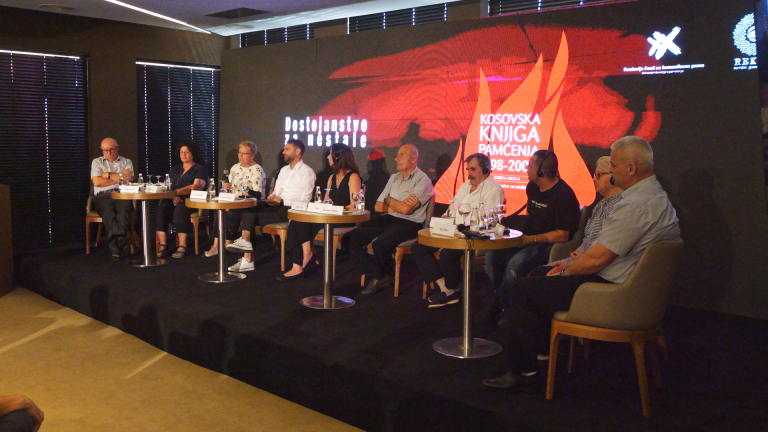

 From November 5 to 10, 2019, the Sixth Transitional Justice School (TJ School) of the Humanitarian Law Center (HLC) was held. The TJ School was attended by 18 students of law, political science, history, Scandinavian languages and sociology, as well as activists from Serbian non-governmental organisations.
The participants gained knowledge about the concept and mechanisms of transitional justice, and its application in Serbia in the context of the armed conflicts in the former Yugoslavia, with a consideration of case studies of crimes committed in Bosnia and Herzegovina, Croatia and Kosovo. In addition to the opportunity to learn the facts established before the International Criminal Tribunal for the former Yugoslavia (ICTY), the participants had the opportunity to hear about the results and challenges of war crimes prosecutions before the courts in Serbia, Croatia, BiH and Kosovo. Besides learning about the facts established before the ICTY and national courts, the participants also had the opportunity to learn about topics related to institutional reform, lustration, and reparations, as well as topics related to memorialisation.
According to the participants, they did not have the opportunity to acquire the knowledge gained at the TJ School during their formal education. The very approach itself, in which, instead of the uncritical acceptance of information, reflection, mutual discussion and the formation of one’s own opinions on key topics in dealing with the past, such as responsibility, guilt, ways of securing justice, establishing the truth and remembering victims, were fostered, was new to the participants. They supported the approach whereby lectures related to trials before national courts of the countries of the region could be found in the curriculum of the TJ School. They suggested that the lessons regarding other post-conflict societies, such as Rwanda, South Africa and certain Latin American countries, should be included in the programme. The participants also consider it important that young people who have not had the opportunity to learn about transitional justice, as well as the youth of political parties, high school students and journalists, are included in similar educational programmes. They also believe that learning about events from the past based on judicially established facts should be included in official programmes at the faculties of social sciences, both in basic and master studies, as this would help avoid distortions in the interpretation of events, or their concealment.
This year’s Transitional Justice School was supported by Civil Rights Defenders.