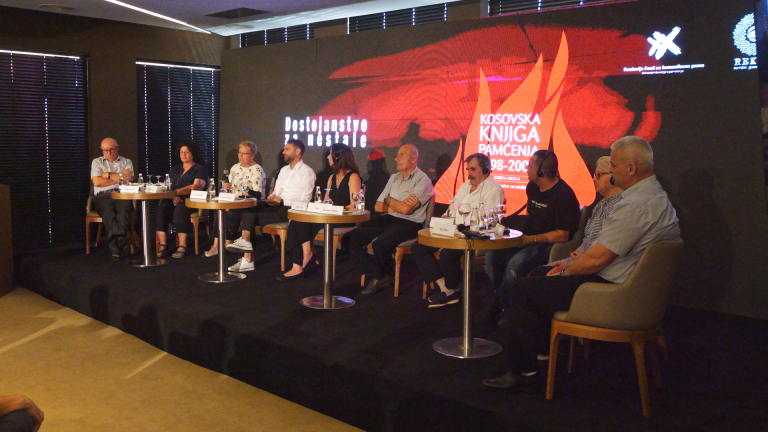

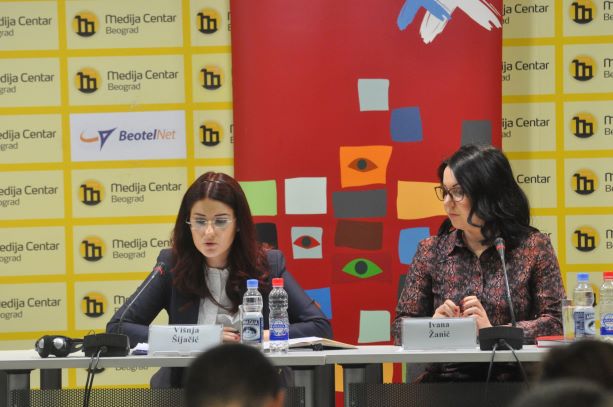
 On Wednesday, 24 July 2019, the Humanitarian Law Center (HLC) presented its fourth Report on the Implementation of the National Strategy for the Prosecution of War Crimes. In her opening remarks, Ivana Žanić from the HLC pointed out that, as the only non-governmental organisation in Serbia continuously monitoring domestic war crimes trials, the HLC also monitors the implementation of the National Strategy for the Prosecution of War Crimes, and every six months releases reports on the state of implementation of the Strategy.
Žanić stated that during the reporting period, which covers December 2018 and the first five months of 2019, there was no significant increase in the number of investigations and indictments. She pointed out that the Prosecutorial Strategy for Investigation and Prosecution of War Crimes failed to include clear criteria for the Office of the War Crimes Prosecutor (OWCP) to use for prioritising war crimes cases for prosecution in the coming period. Žanić also noted that access to information on war crimes trials was being hindered. To illustrate this point, Žanić mentioned the official website of the OWCP, which provides too little information, and couches it in a style which is virtually telegraphese. Moreover, all the indictments posted on the OWCP website have been anonymised in accordance with the recently adopted Rules on Personal Data Anonymisation in the OWCP’s Indictments. As a result, Žanić said, the indictments were rendered unreadable and citizens were denied the right to know the identities of the victims and of the accused listed in OWCP’s indictments.
The author of the Fourth Report, Višnja Šijačić, presented its main findings, which reveal that in the 40 months since its adoption, the National Strategy has failed to achieve any significant progress in prosecuting war crimes. Only four new indictments were raised during the reporting period, and 18 of the 21 indictments raised since the adoption of the National Strategy have been transferred to the OWCP from BiH. Šijačić noted that war crimes trials were protracted, with hearings being scheduled, on average, 30 days apart. As regards the victims’ procedural rights, Šijačić added the legal framework remained only partially aligned with the acquis.
Furthermore, the findings of the HLC’s Report indicate that no progress has been made towards improving societal attitudes towards war crimes and war crimes trials. To illustrate this point, Žanić said that the facts established by the Hague Tribunal were continually denied, especially on and around the dates commemorating anniversaries of crimes, such as the Srebrenica Genocide Memorial Day on 11 July. Sociologist Stanley Cohen has called this “interpretive denial“, a form of denial that concedes that something has happened, but considers the legal qualification of what has happened to be too harsh and not reflecting the reality that we acknowledge. Žanić concluded by stating that the Fourth Report showed that the main objective of the National Strategy – significantly improving the efficiency of the investigation and prosecution of war crimes – remained unachieved.