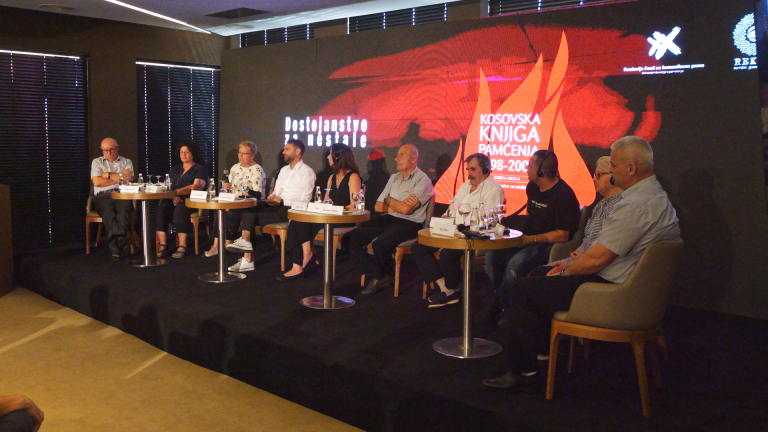

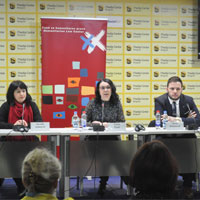
 On Friday, 6th December 2019, the Humanitarian Law Center (HLC) presented its “Policy Proposal/Policy Paper: Improving the Rights and Status of Victims and Witnesses in War Crimes Proceedings in Serbia”. In her opening remarks, the HLC’s Ivana Žanić recalled that the HLC is the only non-governmental organisation in Serbia that has been monitoring and analysing all war crimes trials before the courts in Serbia, and informing the domestic and international public about them since 2002. Its long-term experience and in-depth knowledge of war crimes trials in Serbia, said Žanić, has enabled the HLC to identify problems and shortcomings in the existing victim/witness protection system, and develop a policy paper which discusses the current state of play and formulates recommendations aimed at enhancing the rights and position of victims and witnesses in war crimes trials in Serbia. She pointed out that the policy proposal is based on information obtained from the competent authorities, as well as from victims through interviews conducted as part of the HLC’s field research on the subject. Other important sources of information have been the HLC’s previous analyses and reports. Žanić concluded by stating that the findings of the research show that victims who have chosen to testify before the courts in Serbia are exposed to a great deal of emotional strain during, before and after the testimony, as a result of the reliving of their traumatic experiences.
The author of the Policy Paper, Meris Mušanović, pointed out that the role of victim-witnesses in war crimes proceedings is crucial, because their testimonies are often the only key evidence to substantiate the charges. However, the way the competent judicial institutions treat these witnesses puts them off from participating in criminal proceedings and undermines their confidence in the judicial system. Mušanović said that the findings of the Policy Paper revealed several deficiencies in the existing victim and witness support system, such as the inadequate normative framework regulating the position of victims and witnesses, the inadequate capacities of institutions responsible for providing assistance and support to victims and witnesses of war crimes during all stages of criminal proceedings, the insufficient training and sensitisation among staff of the institutions handling war crimes as regards the needs of witnesses, the absence of a psychological support system, the failure of compensation claims to be decided upon during the course of criminal proceedings, and the absence of protection measures for victims of sexual violence in the Criminal Procedure Code.
Biljana Slavković, a psychotherapist with lengthy experience in counselling victims of crime, underlined that war trauma is a complex trauma, as a result of which the victims find it hard to restore their trust in people and accept that other people can help them. Building a relationship of trust with a victim is therefore of the utmost importance and something that prosecutorial and judicial staff ought to take into account. Slavković recalled that the term “victim” had not yet been introduced into the domestic legislative framework, which she sees as indicating a value orientation that shields society from acknowledging past crimes.
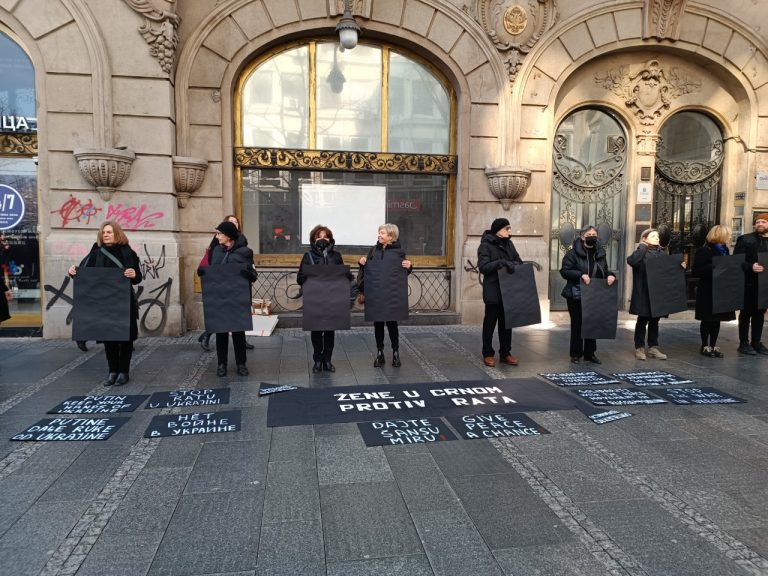
Suvada Selimović, the witness in the Zvornik II Case, related some details about the war crime which occurred in the villages around Zvornik on 1 June 1992. She went on to say that when the trial of this case began she was dreading having to come to Belgrade to attend the reading out of the charges, but that, with HLC staff on her side, she managed to overcome the fear. In the five years of the Zvornik II trial, she missed only two hearings. Now, after the end of the trial, she has gained new strength and is no longer afraid to travel to Serbia or speak at public events. Selimović said that, thanks to support from a psychologist, the HLC and the Women in Black, she had overcome the anxiety associated with giving evidence in court, and that her trust in people had been restored.