
Amnesty International is calling on the Serbian authorities and specifically Prime Minister Vojislav Koštunica and President Boris Tadić to urgently condemn attacks on human rights activists and on ethnic minorities in the country.
“If the authorities fail to act now people’s lives may be put at risk as more protests against Kosovo’s declaration of independence are being scheduled,” warned Nicola Duckworth, Europe and Central Asia Programme Director at Amnesty International.
“The Serbian authorities must strongly condemn any attempts to victimise members of Serbian society. They should ensure that any attacks on human rights activists and minorities are promptly and meaningfully investigated and those responsible are brought to justice.”
Following the declaration of independence by Kosovo, a member the Socialist Party of Serbia (SPS), Ivica Dacic, spoke in the Serbian Parliament in support of a policy by the country’s former president Slobodan Milošević, saying he would advocate the banning of all political parties and non-governmental organizations (NGOs) which recognized Kosovo as independent. He specifically singled out Nataša Kandić, a human rights activist and director of the Humanitarian Law Center in Belgrade who attended the ceremony declaring independence at Kosovo’s Parliamentary Assembly on 17 February 2008. According to media reports the SPS are filing a criminal complain against Nataša Kandić for inciting others to compromise the territorial integrity of Serbia.
In addition to this threat, Amnesty International is also concerned about the physical safety of Nataša Kandić. An interview with Borko Ilić – vice president of the Democratic Party of Serbia (DSS) – in the daily Kurir, was headlined Traitor. Another article in the daily Većernje novosti was headlined Nataša Kandić, the woman who does not exist, implying that as a non-person, her elimination would be without consequences. Other human rights activists also have concerns for their security.
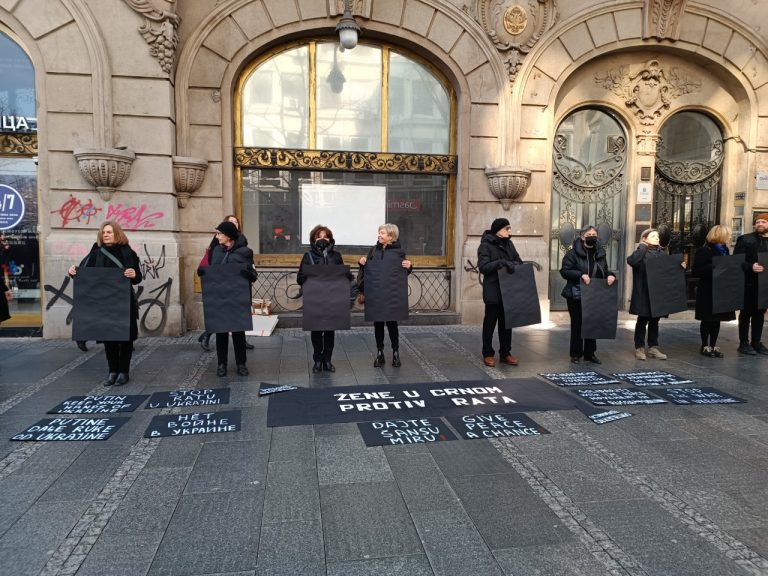
During protests on 19 February in all major cities in Serbia, attended by hundreds of people, demonstrators reportedly called for the murder of ethnic Albanians. In Kragujevac a fast food restaurant run by Gorani (a Bosnian speaking ethnic minority from Kosovo) was vandalized. In Bor, windows of a confectionery shop also run by a Gorani were smashed, as were those of cars.
“It is very important that the authorities take measures and are seen to do so in order to prevent any future human rights violations” Nicola Duckworth said.
BACKGROUND
On 17 February 2008 Kosovo, a province of Serbia which has been administered by the United Nations since 1999 under 1244 Security Council Resolution, declared unilateral independence from Serbia. Speaking in October 2007, following her visit to Serbia, the Special Representative of the UN Secretary General on the situation of human rights defenders expressed particular concern about the “hostile attitude against the core group of human rights NGOs and prominent defenders, mostly women, who are under constant attack, mainly in the media”. She went on to report that the “stigmatization of defenders, which portrays them as enemies of the country is not countered by supportive statement of the State authorities”.
Nataša Kandić and the HLC have been active in challenging impunity for war crimes in the Balkans, and in assisting victims of human rights violations on all sides to receive access to justice. During the war in Kosovo in 1999, Nataša Kandić was one of the few Serbs present in Kosovo during the conflict who succeeded in bringing to public attention the violations of international humanitarian law committed by all parties to the conflict.