

 On Sunday, February 27, 2022, it will be 29 years since the crime in Štrpci (Bosnia and Herzegovina), in which members of the Army of the Republic of Srpska (VRS) kidnapped and killed 20 non-Serb civilians, passengers on a train travelling from Belgrade to Bar. The Humanitarian Law Center (HLC), Women in Black, Sandžak Committee for the Protection of Human Rights and Freedoms and Youth Initiative for Human Rights recall the public’s attention to the fact that victims’ families have been waiting for judicial justice in Serbia, and the recognition of their status as family members of civilian victims of war, for 29 years now. For 29 years the public has been waiting for the recognition, accountability and memorialisation of victims by the institutions of Serbia.
The victims of this crime are: Esad Kapetanović, Ilijaz Ličina, Fehim Bakija, Šećo Softić, Rifat Husović, Halil Zupčević, Senad Đečević, Jusuf Rastoder, Ismet Babačić, Tomo Buzov, Adem Alomerović, Muhedin Hanić, Safet Preljević, Džafer Topuzović, Rasim Ćorić, Fikret Memović, Fevzija Zeković, Nijazim Kajević, Zvjezdan Zuličić and one unidentified person. The victims were from both Serbia and Montenegro, from Belgrade, Prijepolje, Bijelo Polje and Podgorica. The oldest victim was 59 and the youngest 16.
To date, the mortal remains of only four victims have been found. The body of Halil Zupčević was discovered in late 2009 in the village of Sjedača on the bank of Lake Perućac, whilst the mortal remains of Rasim Ćorić, Jusuf Rastoder and Ilijaz Ličina were discovered at the same location in 2010. The search for the other bodies is still ongoing.
So far, only Nebojša Ranisavljević and Mićo Jovičić have been convicted of this crime. Nebojša Ranisavljević was sentenced before the Higher Court in Bijelo Polje (Montenegro) in 2003 to 15 years in prison. Mićo Jovičić, who was tried before the Court of Bosnia and Herzegovina, pleaded guilty and was sentenced to five years in prison.
Proceedings for the crime in Štrpci are currently ongoing before the courts in Bosnia and Herzegovina and Serbia. The trial of eight indictees is ongoing before the Court of BiH, including Luka Dragičević, commander of the VRS Višegrad Brigade, and Boban Indjić, commander of the Intervention Unit of the Višegrad Brigade.
The War Crimes Chamber of the Higher Court in Belgrade has an ongoing proceeding against four members of the VRS Višegrad Brigade for crimes committed in Štrpci; they are charged as direct perpetrators.
The families of the victims, most of whom are Serbian citizens, have been ignored by state authorities responsible for the care of civilian victims of war (the Ministry of Labour, Employment, Veteran and Social Affairs) for over two decades. Owing to the discriminatory legal framework in Serbia, victims’ families are deprived of the right to obtain the status of family members of civilian victims of war simply because their family members were killed outside the territory of Serbia, although they were its citizens. This would provide them with practically and symbolically significant personal benefits in the form of monthly cash allowances and social support.
The victims and their associations, as well as the HLC and other civil society organisations, have been pointing to the inadequacy of the existing legal provisions and the discriminatory manner of their implementation for years. Despite the serious objections from domestic and international actors, the law has not yet been amended; instead, in August 2018, the Ministry of Labour drafted the Law on Veteran and Disability Benefits, which retains discriminatory solutions.
The HLC, Women in Black, Sandžak Committee for the Protection of Human Rights and Freedoms, and Youth Initiative for Human Rights urge the Serbian institutions to prosecute this crime effectively, and the Ministry of Labour and other relevant institutions to pass a new law based on the Model Law on the rights of civilian victims of human rights violations committed during and in connection with armed conflicts in the period 1991 to 2001, which contains normative solutions for the exercise of victims’ rights as formulated under international human rights treaties and in accordance with other international standards for providing reparations to victims.
The victims of the Štrpci Crime are invisible in the official memory policy of Serbia. In 2009, the local government in Prijepolje erected a memorial to the nine killed from Prijepolje and provided symbolic financial assistance to their families, while local officials participate in organising and speaking to mark the anniversary of the abduction. This is one of the few positive examples of the attitude of Serbian institutions towards victims coming from the minority ethnic community. However, while local governments and NGOs commemorate the anniversary of the abduction in Štrpci every year, the victims of this crime, as well as all non-Serb victims of the armed conflicts in the 1990s, remain invisible in state-level memorialisation practices, which focus solely on Serb victims, and glorify the role of the army as well as of convicted and non-convicted war criminals.
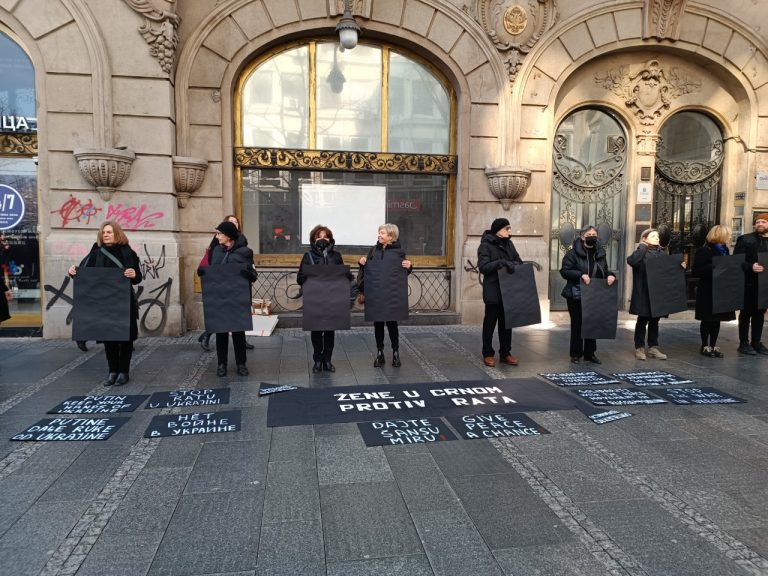
The HLC, Women in Black, Sandžak Committee for the Protection of Human Rights and Freedoms and Youth Initiative for Human Rights will mark the 29th anniversary of the crime in Štrpci on Sunday, 27 February 2022, beginning at 3:48PM in Knez Mihailova Street (in front of the Kafana ‘Ruski Car’), and on this occasion, they invite citizens, representatives of institutions, media and NGOs to join them.
As every year, the HLC will participate at the commemoration in Prijepolje, together with members of the families of the victims.