

 A new project aims to create a comprehensive database of all the prison camps and other wartime detention facilities across the country over the next five years.
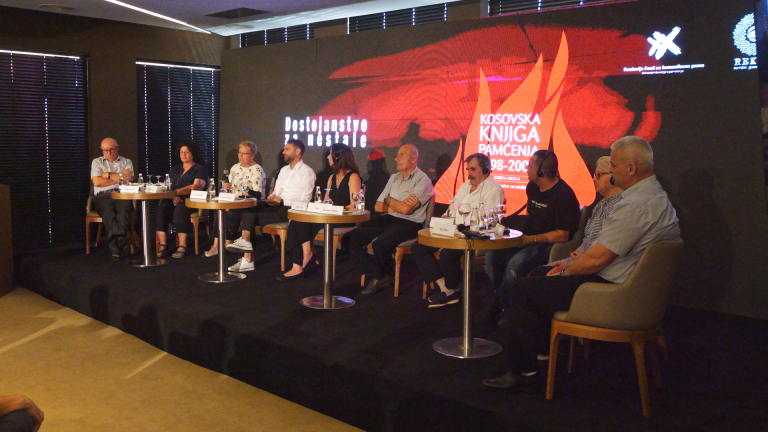
“Our goal is to introduce this issue to the public,” Elmina Kulasic, president of the Transitional Justice, Accountability and Remembrance in Bosnia and Herzegovina association, which is running the project, told a press conference in Sarajevo on Tuesday.
“So far we have completed the profiles for 15 camps and detention facilities, and we worked on it for several months. Now it is important to develop partnerships with various organisations to improve our work,” Kulasic said.
The coordinator of the project, Hikmet Karcic, said that it is estimated that there were more than 600 locations where prisoners were held during the 1992-95 conflict.
“We hope that after this work is done, we will be able to put together a working group of experts which will define what a camp is, what is a concentration camp, what is a transit camp, and what is a prison during a war,” said Karcic.
Karcic showed data on three detention facilities from the war, in Foca, Butmir and the village of Kacuni in the Busovaca area.
He explained that the verdicts handed down by the Hague Tribunal and the Bosnian state court, as well as witness statements, suggested that over 260 people were killed in Foca, which makes it the camp with the largest number of victims, while Butmir was the camp with the highest number of prisoners, with over 10,000 people being detained during the time that it was open.
However there were no court judgements with information about Kacuni, so the project had to rely on witness testimonies alone, “which are quite uncertain”, according to Karcic.
Sarajevo law professor Zdravko Grebo praised the project as “an attempt to reach the factual truth about what was done during the war”.
“The time has finally come to deal with this because there are fewer living witnesses of that time, and we need them to find out what happened,” he said.
But although the project managers said they were cooperating with all the wartime detainees’ associations, the president of the Association of Prison Camp Detainees of Bosnia and Herzegovina, Jasmin Meskovic, issued a statement saying that it was “presenting incomplete information and a distortion of the facts”.
“Although the Association of Prison Camp Detainees participated as a partner in the implementation of the project from August to December 2013, and made a contribution in documenting ten camps, for which there are final verdicts, we distance ourselves from the results of the project, because originally it was agreed that the project will deal only with the camps whose existence was confirmed by a final court verdict,” said Meskovic.
When asked about Meskovic’s statement, Karcic said that it was “just a misunderstanding”.